
Thank you to WFMZ for including me on a recent episode of Business Matters!

Thank you to WFMZ for including me on a recent episode of Business Matters!

https://drive.google.com/file/d/1Fh5vB7bD0OS1gCrXF8kcJxtIcbvp3AM1/view?usp=sharing
| In 2019, I attended an IWWG Conference that didn’t end so well. The excitement and creative energy in addition to commuting back and forth for six days, enrolling in two intensive workshops, attending every breakout session, and tackling traumatic subject matter spiraled me into mania. I had to leave the conference early, missing the culminating activities, including performances of my classmates’ scenes for which I’d been asked to perform in and had rehearsed all week. As a professional mental health peer advocate, I was mortified by my erratic behavior and relapse. Even worse, I felt tremendous guilt about missing the opportunity to perform in my classmates’ pieces. I swore I’d never show my face again at another IWWG Conference. Last year, I mustered the courage to attend the annual IWWG conference since it was only an hour away and my writing buddy would also be attending. This time I was determined to finish the conference with my dignity (and sanity) intact. I vowed to pace myself, practice self-care, avoid alcohol, and get plenty of sleep. I packed my bags and hoped no one would remember me. As soon as I arrived, I recognized many names and faces from that dreaded conference. I’d noticed others looking at me, probably wondering if I was that same poor girl whose husband came to retrieve her in her frenzied state several years ago. Embarrassment and shame burned through me, but I pushed those feelings aside and carried on. I maintained a low profile for the rest of the week and resisted any of the night time events. However, I’d written a piece that I wanted to share at an open mic night so I signed up and prepared for my reading. As I was revising my piece, a voice kept niggling in my brain—Why am I here? Impostor syndrome set in. Who will even care about what I have to say, especially since they likely think I’m crazy? The shame of stigma paralyzed me. I’d never be able to redeem myself among these esteemed writers with years of conferences and accolades under their belts. Still, I felt this pressing need to speak. Then it hit me— Maybe I could use this open mic as an opportunity to not only acknowledge my mental illness but to illustrate what recovery looks like. Recovery looks like me. I recalled all I’d learned since that first episode twelve years ago. I reminded myself that even though I had a setback, I’d rebounded and returned wiser and stronger. Isn’t that what recovery is all about? As a proud peer advocate, I like to be open and transparent about my own mental health struggles. Since there’s no cure for mental illness, relapses are bound to happen. I decided to use the open mic as an opportunity to inform others about mental health and to reclaim my voice and dignity among the very people with whom I’d lost it several years ago, After all, life is not about how far you fall, but how many times you get back up. This speech is the result. I have to admit I’m proud of my transparency and courage. |
I’m so honored to have been featured in NAMI’s End of the Year appeal. I hope that my story will inspire others in their own mental health journeys. Mental illness is a manageable illness and there is hope no matter how hopeless you feel. Hopelessness is a persuasive and dangerous symptom of depression; it convinces you that there is no hope when there is always hope! Hope for a new medication or treatment, hope with new and effective coping strategies, hope with knowledge and support, hope for future wellness! Check out my feature at the link below


I don’t know how many times I’ve heard these responses to my depression. As if it’s that easy. Anyone who tells you “You’re just having a bad day. You’ll feel better in the morning” has clearly not experienced the crippling agony and utter devastation of depression.
Thankfully, there are programs in place that help family members understand and support their loved ones with mental illness. The Depression and Bipolar Support Alliance (DBSA) and The National Alliance on Mental Illness (NAMI) run programs and support groups for family members and friends.
The Lehigh Valley DBSA holds weekly support group meetings on Wednesdays at First Presbyterian Church on Tilghman St in Allentown from 7-9 pm. Contact information can be found by clicking here.
Another resource to help friends and family members understand mental illness and support their loved ones is NAMI’s Family-to-Family program, a free 12-session educational program taught by trained family members who have been there.
If friends and family members are not able to attend support meetings or participate in programs, there are plenty of websites to guide them. I referred my husband here.
As I was gathering material for this new blog site, I revisited an old blog I started 5 years ago. I wish I could have told my younger self not to worry so much and that it would all work out for the best. But then again, I needed to experience those lows to be able to fully appreciate where I’m at now. I needed to surround myself with people who would appreciate me and lift me up rather than undermine me and tear me down. While this site is dedicated toward helping others and advocacy, I started blogging five years ago to make sense of my life and the twists and turns it had taken. I wanted to form meaningful connections with others who struggled in similar ways. I longed to be authentic, but I worried people wouldn’t accept me. So I tried hard to be a person I was not and I felt even worse. You can find my old blog here: https://hidinginthespotlight.wordpress.com/
Now I am content with a smaller circle of friends and I put my time and energy into people who matter–people who will be there when the road is rough, people who aren’t just there when it’s convenient or they want something, people who I can be myself around.
When I was growing up, I remember my mom telling me I would be lucky to find just one true friend in life. At the time, I thought that was absurd and I figured she just wasn’t that popular or outgoing when she was my age. Besides, I had tons of friends. However, as I grew older, I learned the wisdom behind her words. I’m much happier being lifted up my a few loyal friends than surrounded by a group of people who will only end up bringing me down at a time when I need them most. Been there, done that. I respect myself too much now and I have come too far to play games and waste energy. After all, I only have so much energy these days and I need to invest it wisely. Lesson learned, mom.
I found the following tree analogy online, though I’m not sure who originated the idea of the “tree test.” Regardless, it resonates with me and I love it. Here it is:
WHAT KIND OF PERSON ARE YOU?
I have this tree analogy when I think of people in my life, be it friends, family, acquaintances, employees, co-workers, whomever…They are all placed inside what I call my tree test. It goes like this:
LEAF PEOPLE
Some people come into your life and they are like leaves on a tree. They are only there for a season. You can’t depend on them or count on them because they are weak and only there to give you shade. Like leaves, they are there to take what they need and as soon as it gets cold or a wind blows in your life they are gone. You can’t be angry at them, it’s just who they are.
BRANCH PEOPLE
There are some people who come into your life and they are like branches on a tree. They are stronger than leaves, but you have to be careful with them. They will stick around through most seasons, but if you go through a storm or two in your life it’s possible that you could lose them. Most times they break away when it’s tough. Although they are stronger than leaves, you have to test them out before you run out there and put all your weight on them. In most cases they can’t handle too much weight. But again, you can’t be mad with them, it’s just who they are.
ROOT PEOPLE
If you can find some people in your life who are like the roots of a tree then you have found something special. Like the roots of a tree, they are hard to find because they are not trying to be seen. Their only job is to hold you up and help you live a strong and healthy life. If you thrive, they are happy. They stay low key and don’t let the world know that they are there. And if you go through an awful storm they will hold you up. Their job is to hold you up, come what may, and to nourish you, feed you and water you.
Just as a tree has many limbs and many leaves, there are few roots. Look at your own life. How many leaves, branches and roots do you have? What are you in other people’s lives?
Hold On To Your Roots. Be the Root for Someone Else.
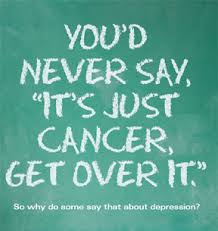
“Get over it.” This is one of the most frustrating responses I get during a bout of depression. Telling someone to “get over it” is like telling someone with broken legs to run a marathon. It defies common sense as depression affects the brain’s ability to think clearly in the first place. Others recommend going for a run or to the gym. If it were that simple, I would have already done that. I know that exercise helps with depression, but when just getting out of bed takes monumental effort, there isn’t much energy left for lacing up.
I don’t blame people who give this advice–in fact, I used to be one of them. I could never have realized the debilitating effects of depression until I experienced them firsthand. However, telling someone who is depressed to just “tough it out” or “snap out of it” points to a profound ignorance about mental health. No one would tell someone with cancer to just “deal with it” (nor should they), but depression is a life-threatening disease as well. Contrary to popular belief, depression is not just feeling tired or sad and upset over a recent loss. It is a serious life-long illness that requires treatment and while it can be managed with medication and lifestyle changes, there is no cure.
Sadly, there are many factors that prevent people from seeking help for a mental health condition. Perhaps the biggest deterrent is the stigma associated with mental illness. It seems mental illness only gets attention when some “crazy” person goes on a shooting rampage or a celebrity suffers a mental breakdown or commits suicide? This type of attention sensationalizes mental illness, instills fear, and attributes it to “the others”–often, the rich and famous or the truly criminal or deranged. It only perpetuates the stereotypes and misconceptions surrounding mental illness. Most mentally ill people do not commit crimes and should not be feared. Furthermore, mental illness affects people of all ages, races, genders, social classes, professions, etc. In fact, the National Institute of Health indicates that mental illness afflicts one in five American adults in any given year, and yet it remains a taboo and often misunderstood subject (2018).
Even though mental illness can be caused by environmental stresses, genetic factors, biochemical imbalances, or a combination, many view those with mental health conditions as “weak” or “lazy” or somehow at fault. Some of my own family members and friends have simply rolled their eyes at my pain and chalked it up to my being “dramatic” or “attention-seeking.” So, not only is someone with mental illness feared, he or she is further burdened with additional labels and made to feel “guilty,” “lazy,” or “ridiculous.” It is no surprise that so many people with mental illness feel rejected or ostracized, which only enhances isolation and feelings of worthlessness. When someone is seriously ill, people often rush to his or her aid delivering meals, sending flowers and cards, visiting them, and/or helping with household tasks or children. Cancer survivors are rightfully referred to as “warriors,” “survivors,” and “heroes.” But even though those with mental illness suffer, fight, and overcome tremendous battles as well, they are seldom honored and celebrated. Many survivors of serious health conditions say they could not have done it without the support of family, friends, colleagues, neighbors, yet many with mental illness find themselves with little support and few allies.
The shame and stigma with mental illness is so prevalent that some would rather suffer in silence (or even end their lives) than admit they have a mental disorder and seek help. Suicide is the 3rd leading cause of death in youths 10-24 and these rates are only rising (NAMI, 2018). Adolescents suffering from clinical depression increased by 37 percent between 2005 and 2014 (John Hopkins Health Review, 2017). Approximately 11 million U.S. adults aged 18 or older had at least one major depressive episode with severe impairment. (NIH, 2017). Clearly these statistics indicate a dire need for mental health intervention, yet there remains a significant deficit in providers and insurance coverage. Mental health programs continue to be cut or insufficiently funded. Research shows that nearly 60% of adults with a mental illness did not receive treatment (NAMI, 2018). With the lack of accessible treatment and the cost of comprehensive mental health care, on top of the stigma, it is not surprising that depression is the leading cause of disability worldwide (World Health Organization, 2017).
With limited access to care, those with mental illness often self-medicate with drugs and alcohol. In fact, 10.2 million adults have co-occuring mental health and addiction disorders (NAMI, 2018). Sadly, drugs and alcohol can be quicker and easier to obtain than an appointment with a therapist or psychiatrist. Furthermore, adding drugs and alcohol to mental illness compounds an already precarious situation. Mental illness can even be triggered by the use of drugs and alcohol. Like most illnesses, early intervention is key and yet little is being done with regards to mental illness other than sensational news coverage and punitive measures. There are valiant community efforts, support groups, dedicated volunteers, and a variety of helpful services and programs, but they are often limited in size and finances.
When will those with mental illness be treated with the dignity they deserve and not forced into silence and shame? When will mental health coverage and the number of providers and services meet the need? There is no simple solution, but each step, no matter how small, makes a difference. Each donation to mental health organizations such as the National Alliance on Mental Illness or the American Foundation for Suicide Prevention (AFSP), each time we speak out for those who cannot or lend a hand or call a friend, we are one step closer to change.
We never know who might be affected. It could be a family member you haven’t heard from in awhile, or a friend who suddenly stops coming to social events or a colleague who is out on a “medical leave.” It might be a child who smiles and seems to have it all, but self-harms behind closed doors. Now is the time to speak out, to share stories, to withhold judgment, to offer support, to seek treatment, to break down the wall of stigma before it takes the life of someone you know and love.
This is another thing that took me years to figure out. Years ago, I joined a moms’ meet up group. Even though I had little in common with the majority of the members (except for the fact that we were, of course, moms), I attended the events and tried to connect with everyone. Needless to say, disappointment ensued as I was excluded from meetups that were “not scheduled.” I remember seeing pictures on Facebook and thinking “how did I miss that meetup?” It turned out I hadn’t missed any meetup; they were all friends and just got together.
I will never forget the day when I was yet again in tears and my husband asked me, “when are you going to realize that they are not your friends?” I was furious at his reply at the time, but it hit me like a punch in the gut: he was right. They weren’t my friends. And what a blessing that turned out to be! They were NOT MY PEOPLE. Celebrate your uniqueness and know that in time you will find your people.

Working My Recovery Every. Single. Day.
Even though it’s been several years since I have had a depressive “episode” (that’s the term doctors have given it, though I associate “episodes” with sitcoms like The Office or Seinfeld—rather ironic, right?), that doesn’t mean I am out of the woods. There is no cure for mental illness and I know that I am vulnerable to more episodes, especially after the initial breakdown. Therefore, I have to work my recovery every day. Mornings tend to be the roughest. I still struggle to get out of bed and begin the day. I used to rise at 5:30 am like clockwork for my teaching job, but those days are gone. It’s pointless to think about what I used to do, because I am not able to juggle all the things I once did (god knows I’ve tried). I’ve accepted that teaching full-time at a public high school is not a part of my new reality (though I fought that notion for YEARS and ended up in the hospital again and again).
Anyway, this summer my daughter is in a playground program so she is gone from 9-12 and yesterday I found myself sucked into the couch watching reruns on ID Discovery Channel until it was time to pick her up. As I started to berate myself for not going to the gym like I planned and for just lying around rather than getting ready for my stepson’s graduation party on Sat., I remembered what my therapist said about “being gentle with myself”–an approach that does not come naturally to me. At all. So I stopped and chose to be gentle with myself. I reminded myself that the day wasn’t over. Sure, I missed the gym class, but It was nice outside and I COULD take a short walk. And just because I didn’t make it to the gym this time, there was still tomorrow.
So instead of continuing to lie around, I forced myself to get dressed, put on one of my favorite Spotify playlists, and take a walk. I’m not going to lie and say it was all rainbows and unicorns, but I can say I felt much better than if I had stayed on the couch. I also noticed I was a bit more productive with the rest of my day.
FLASH FORWARD to this morning. Again I found myself resisting the gym (I do not have the discipline to work out at home so I gave up that battle long ago—not gonna happen). Naturally, I first thought of all the reasons to skip the gym (and most likely return to that godforsaken couch):
Then I reminded myself that I didn’t go yesterday and how that made me feel about myself. So I dressed (incidentally, there was plenty of workout clothes because you actually have to wear them in order for them to be dirty) and left for the gym in a pretty foul mood (Be gentle, Deep breaths.)
Turns out I was late to a full class, but I was there so I figured I might as well go in. I found a spot in the back corner (thank god for those) and retrieved my equipment—a bar, two sets of weights, a step, blocks that go under the step to raise it more (seems overly ambitious), and a mat. Needless to say, setting up was a workout in itself! In fact, I was already sweating, though one side effect of my medication is excessive sweating so, to be honest, it doesn’t take much. People comment on my profuse sweating all the time, (which is actually rather rude, but whatever.)
Once I positioned all my accoutrement, I jumped into the routine –well, begrudgingly moved is more accurate. Every time those negative thoughts entered my head (and they did!), I reframed them. To illustrate this, here is a script between the two parts of my brain, which I will call GOOD and BAD for now.
BAD: Why are these people so fit? Like they even need to come to the gym. (snort)
GOOD: They are fit, BECAUSE they come to the gym. You can be fit, too.
BAD: My weights are clearly lighter than everyone else’s.
GOOD: So what? Everyone starts somewhere. You don’t want to overdo it and hurt yourself like last time.
BAD: That instructor doesn’t even care about her class. She just uses it to get in her own work out. It’s all so fast like we already know what we’re supposed to do. And where are the modifications, for crying out loud?
GOOD: This must be her passion. I’m just glad I know how to adjust my expectations and modify these exercises–
BAD: Or I’d never walk again.
GOOD: Oh come now, that’s unlikely. You’re catastrophizing.
BAD: How do these tiny women lift such heavy weights?! Why aren’t they sweating?!
GOOD: Stop comparing yourself to others. It just brings you down. They’ve probably been lifting weights for a long time and you just started. The fact that you are sweating is a good sign; it’s a natural consequence of exercising.
BAD: I will never be that fit.
GOOD: First, “never” is an absolute; you don’t know that. If you exercised regularly, you might be. Each time you come you get stronger. Give yourself credit for coming, even though you didn’t want to. That’s a huge step.
BAD: Well, I guess it’s better than nothing.
And so it goes. Well, I have rambled long enough for now (and even enjoyed it) so I will bid you all farewell and leave you with this:
EVERY JOURNEY BEGINS WITH A SINGLE STEP.
So, what first step will you take today?
 Christina L. Dunbar