Destigmatizing ECT

60 Minutes: Is Shock Therapy Making a Comeback?

Kitty Dukakis shares her personal experiences with ECT (Electro Convulsive Therapy) and gives viewers exclusive access into her own procedure. While ECT isn’t for everyone, it helps many who have not responded to medication and need more aggressive treatment. It is mostly used for MDD (Major Depressive Disorder) and is known to alleviate suicidal ideation tendencies, though it is not a panacea (cure-all) and it often takes many rounds. ECT also requires in-patient hospitalization for the first week to ensure safety and monitor response. There are many medical factors that need to be taken into account and not everyone is a candidate, but for many, including this blogger, ECT has saved lives.

On Recovery

ON RECOVERY

Recently, a friend shared the following post regarding her recovery from cancer on Facebook:

“I’ve been cancer-free for almost nine months. Some days, I can’t tell if I’m recovering from all of the treatments because it takes so long to recover. But, then I look back on the past nine months and realize that I’ve come a long way. Here’s how I know I’m getting better:

-9 Months Ago: Couldn’t do three push-ups without collapsing.

-Today: Did 20 of them.

-9 Months Ago: I could barely lift 20 pounds.

-Yesterday: I did 48kg deadlifts (I forget how to convert that number into pounds).

-9 Months Ago: Couldn’t run a mile in less than 14 minutes.

-Today: I run multiple miles in less than 12-minute miles… getting closer to 11-minute miles.

-9 Months Ago: Sometimes, I slid down the stairs because chemo made my feet numb and it was easier to slide than try to walk down the stairs.

-Today: I still hold onto the railing for dear life, but I let go on the last few stairs, now.

So, when I type it out like this, I see that there is so much to celebrate on this birthday. I’m still praying for a full recovery, but, really, I’m just grateful to be here and to know so many wonderful people”

***************************************************************************

Naturally, I was thrilled to read of her progress and all the supportive comments that followed her post. Then I thought about how far I’ve come with my own illness and I felt grateful, too.  But I wondered: what responses would I get if I posted my progress regarding my mental health condition? Would people think I was just seeking attention, exaggerating, or minimizing my friend’s struggle with cancer? Would others even read it? If they did, would they just roll their eyes and move on?  Or would they avoid me the next time they saw me in person, as if my depression might somehow infect them?

I understand that people might not know what to say to someone who struggles from depression, but saying nothing just makes a person feel more ashamed, more worthless, more invisible, and more alone.  So here is my celebration of my progress within the past 7 years

My Recovery from a Mental Health Condition:

“7 years ago, my brain broke and I was diagnosed with bipolar II and major depression. I felt like I was given a death sentence, because there is no cure for mental health conditions and I will never be “free” of it. Some days, I struggle with feelings of worthlessness, fatigue, and loss of purpose and identity; It all seems too much to bear. But, then I remember how far I’ve come and  how much I’ve learned. Here’s how I know I’m doing better:

-7 Years Ago: I was so ashamed and embarrassed, I isolated. I had no idea what was wrong with me or how to get better.  

-Today: I have shared my story publicly and strategies I use to stay well with hundreds of patients and peers and teach NAMI education courses on an ongoing basis.

-7 Years Ago: I had 30 rounds of ECT and had difficulty remembering things and communicating my thoughts.

-Today: I regained my short-term memory, my brain responds to medication, and I am able to manage side effects.

-7 Years Ago: I was unable to work and convinced I’d never work again, let alone teach.

-Today: I have several jobs that allow me to use the skills I’ve spent my whole life building (NCC, NAMI, PBS, and TUTOR DR)

-7 Years Ago: I wanted to die to stop the persistent feelings of worthlessness, hopelessness, and despair

-Today: I enjoy life and I know I have worth, purpose, and hope.

-7 Years Ago, I could barely get out of bed, get dressed, shower, and complete basic household chores

-Today: I get out of bed, complete household chores, and take care of my child on a regular basis.

-7 Years Ago: I didn’t even want to leave the house and took no pleasure in any of the things I once loved.

-Today: I direct school plays, sing in a band, perform  in community theatre, and maintain my own blog.

So, when I type it out like this, I see that there is so much to celebrate, though many will still consider me “weak,” “lazy,” “crazy,” or “over-dramatic.” I know this will be a lifelong battle and there will be relapses, but I’m grateful to be here and to have the knowledge and skills to manage my condition, educate the public, and inspire hope to others with mental health conditions.

Why is a mental health condition treated differently than a physical one? Both are life-threatening medical conditions that affect millions of people. Both require extensive treatments and medications with crippling side effects. Yet someone with cancer is accepted, acknowledged, and supported while someone with a mental health condition is questioned, avoided, shamed, and blamed. No one says to someone with cancer, “get over it,” or “you’re just too lazy to work” or “you just want sympathy” or “there are days I feel like I have cancer, too.”  That would be ridiculous. Yet, people with mental illness hear that all the time. Is a person who is battling mental health condition any less of a warrior, role model, or hero? My friend is resilient, strong, and courageous. So am I. So is anyone who fights daily to overcome any other debilitating disease.  Just because an illness cannot be seen doesn’t mean it isn’t there or is any less serious.

Until mental health conditions are given the same respect, attention, and care as physical health conditions, the stigma surrounding mental illness will continue and people will suffer in silence and shame. Precious lives will be taken that might have been saved. If you are struggling with mental illness, you are not alone. You are seen, heard, honored, and loved more than you could ever know. Fight on, brave warrior—we see you, we hear you, we honor you.

Using Humor To Cope Part 2

During a PlayLab session at the International Women’s Writing Guild Conference last week, I introduced my short piece called “Bang Head Here,” which you will find in my blog post “Using Humor To Cope.” The presenter encouraged me to explore other possible endings and I came up with this FAR MORE satisfying ending–the ending that all teachers want, but never get the chance to say. I hope you like it. I know I do!

Bang Head Here Revised July 17, 2019 for IWWG Conference

PRINCIPAL, a 30-year-old male in tan dress pants and a light blue button-down collared shirt under a gray sports jacket sits at a large mahogany desk in his office leisurely scrolling through e-mail with a warm cup of coffee resting on upper right side of desk.  TEACHER, a neatly dressed woman in her mid to late 40s, stands outside his office, anxiously waiting for PRINCIPAL’S attention and glancing at her watch. TEACHER wipes sweat from forehead and clears throat to get his attention.

P (looks up, but quickly resumes typing):  I’ll be right with you.  I’m just finishing up an e-mail.

T  (glances again at watch uneasily, clearly annoyed):  I can see you’re busy, but our appointment is scheduled for—

P (Still focused on screen, waving T into his air-conditioned office and continues to type):  Oh, yes. Please have a seat.  I’ll be right with you.  (He grins and chuckles to himself, as if he’s crafted a witty post or created a new meme). 

T: (Sitting in chair): I have to teach in ten minutes.

After a final emphatic click and a self-assured nod, P sighs and leans back in leather high-backed swivel chair.

P:  (Folding hands behind his head).  So, what brings you here?

T: As I mentioned in my e-mail, I wanted to address some concerns I have related to Anthony’s ongoing behavior in my class.

P:  Oh yes, that’s right. Neat kid.  (Nods head agreeably, though he has no clue who Anthony is). So, what seems to be the problem? (P leans forward to sip some coffee.)

T: (Matter-of-fact): Tony disrupts class on a daily basis and it’s making it difficult for the other students to learn.

P:  Hmmm, I see.  (He takes another sip and replaces cup, folds hands on desk.) So, what is he doing to disrupt the other students?

T:  Well, yesterday he just got out of his seat and took another student’s pencil.  Then he—

P (Cutting teacher off.  Defensively.) Perhaps he needed a pencil.

T:  I don’t think so.

P:  How do you know that?

T: He threw it out the window.

P: Wait. Why was he near the window?

T (Confused by question):  Why was he—?

P:  Yes, why was he by the window in the first place?

T:  His case manager recommended Tony be able to get up and move as he feels the need.  It’s part of his IEP. The point is he took another student’s pencil and

P:  Yes, I understand that.  But why would he go to the window

T:  Probably to throw out the student’s pencil.

P:  Why were the windows open?

T:  It’s over 90 degrees today and there’s no air-conditioning in my room.  It gets very hot in a small room with 30 students and it helps to–

P:  In the future, just have him sit on the other side of the room so he isn’t near the window.

T (frustrated):  He doesn’t sit near a window. He got out of his seat and walked over to the window. That’s when he grabbed a student’s pencil and tossed it—

P (As if in thought) Now, I’m not suggesting…. Well, I’m wondering if…. Well, exactly what were the other students doing when Tommy got out of his seat?

T: Tony.

P:  What? Oh, Tony.  Yes, Tony.

T:  They were writing in their journals.

P (Disapprovingly, turning mouth down):  That’s a rather sedentary activity.

T:  Well, it’s a five-minute freewriting exercise to get their ideas flowing and to generate material for their writing.  It also helps with fluency.

P: (Confused):  Fluency?  (Beat.)  Could this activity be more interactive?

T:  After they write, they share what they’ve written with a peer.  It’s just a warm up to get them—

P (Shakes head in confusion):  A warm-up?

T:  Yes, to get them thinking, writing, putting their thoughts—

P:  But what do they DO with these thoughts?

T:  It’s a prewriting activity for the first stage of the writing process.  Eventually, their responses become—

P:  Yes, but—

T:  the basis for a thesis or a narrative or a poem.

P:  But clearly, this is not an activity that engages ALL students so consider other ways for students to express their ideas.  Otherwise, Tommy will continue to be disengaged and act out.  I would suggest reaching out to other teachers for ideas on how to create more engaging lessons.

T:  This was just a five-minute—

P:  Well, let’s get back to Johnny.  I mean, Tommy.  How did you respond when he threw the pencil out of the window?

T:  I gave the student another pencil so she could continue writing, but at that point, most of the students were reacting to Tony so I asked him to step out into the hall so I could speak to him privately, but he yelled “Fuck that! I’m going to the library!” and stormed out of the room.

P:  So you just let him go?  That sounds like you’re rewarding him.

T:  Well, I couldn’t continue to follow him down the hall and leave the other 29 students unsupervised.  I did call the library and they confirmed he was there.

P:  Why didn’t you send him to his case manager?

T:  She is co-teaching a class that period so she isn’t available.  There is another case manager Tony can go to, but he refuses.

P:  Have you talked to his case manager about this?

(checks watch, running out of time):  Not face-to-face. I did send several e-mails to her as well as his guidance counselor explaining the ongoing situation, but I haven’t heard back yet.  I’ve also spoken to his mom about his behavior.

P:  And what did she say?

T:  She said she gave up years ago and wished me luck.

(A brief pause ensues.)

P:  You mentioned ongoing behavior?  What other things has Tim done?

T:  He calls out random things in the middle of class to get attention. 

P (smiles and leans back in chair):  Ah, so he’s comfortable speaking out in class.  Perhaps you could find positive ways for him to use his voice and sense of humor?

T (shocked and confused): Sense of–??

P:  He obviously wants to participate.  Perhaps you could let him teach a lesson or assist in some other constructive way?

T:  I tried that and it was a disaster. He ended up making faces at his classmates and telling jokes. I’d love to get him involved that way, but he would still need to follow the expectations, stay focused–

P:  I’m sure he will once you give him some leadership.  He hasn’t had problems in his other classes.  Have you talked to them about what they’re doing?

T:  Actually, I emailed all of his teachers this semester.  Only two responded and they both said he acts the same way in their classes. 

P:  I must say, I’m surprised.  We’ve never had any problems with Tim in the past.

T:  Tony was expelled last year and spent the rest of the school year in alternative school.

P:  I mean, this year.

T:  (Checks watch.) Well, I have a class in one minute so –

P:  Oh, have you met the Special Ed Lead Teacher?  He’s a great resource, too.

T:  Yes, we co-taught a class last year. (Rises to leave.)

P: I’m really glad we could figure this out. 

T: Oh, I figured it out. You want me to waste taxpayers’ money and deny 29 other students their right to an education so I can escort a special needs student to the library because his case manager is co-teaching a class and isn’t even available as a resource, which is in clear violation of his IEP.

P: (Confused.)Wait. What???

Bell rings.

T: We can continue this conversation in my room after school. I’m in A125.

P is still processing, not sure what just happened.

T: (Turns back right before she enters the sweltering heat of the hallway.) Oh, and you might want to ditch the sports jacket. It’s hot. 

Even “The Boss” Struggles with Mental Illness

Even Bruce Springsteen is not immune to mental illness. He opens up about medication, chemical imbalances, two breakdowns, and how music became his “refuge” and “chased away his blues.” He finds he struggles most with his depression when he isn’t working or on the road. For many with mental health conditions who may be unable to maintain steady employment, this is a constant struggle. Most people I have met with mental health issues are hard workers who take great pride in their careers so when they find themselves unable to work, it is devastating. They lose a sense of purpose and identity.

It doesn’t help that mental illness is not a visible condition like a physical limitation so some may interpret a legitimate disability as laziness or just taking advantage of the system. The sad part is that many want to work and even need work to stay well and yet they can’t. Then they are made to feel worse by labels and stereotypes. It is an endless riddle and a constant challenge to maintain self esteem and a sense of purpose when one loses their ability to work. Rather than providing a supportive environment for employees with mental health conditions, employers are often unwilling to make any accommodations , or even worse, target those individuals, forcing them out of the workplace. Even though I am content and hold several fulfilling jobs now, I still struggle with having to resign from my last teaching position and losing the seniority, tenure, salary, retirement plan, and career for which I had worked so hard. I do believe I am in a better place now, but the loss is still there and the scars remain.

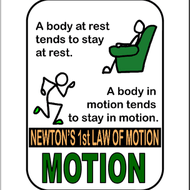
Newton’s Law of Motion and Mental Health

I’m no scientist and I don’t remember much about Physics, but I know all about inertia. It is easy for me to get stuck in a rut and I have to really push myself to get motivated. Some days are easier than others, but one thing’s for sure: lying on my couch doesn’t help. Once I get sucked into the couch vortex, I can disappear for hours. One hour leads to another and another. Before I know it, the day is almost over and I accomplished nothing. Then I think of all the things I should have done. Then I feel the guilt and shame and worthlessness. It’s a vicious cycle–the less I do, the worse I feel, and the more negative my thoughts become. So what does this have to do with Newton’s first Law of Motion? Everything.

In a game of dominoes, the dominoes remain still until one topples. When one moves, it causes the next to fall and so on. Bodies are no different. That’s why I need to make sure I get up and move during the day. It doesn’t need to be exercise or anything in particular, but if I don’t force myself to get up, I can easily stay there for a long time. Then the feeling and thoughts get going and soon I’m spiraling down a dark dark hole. However, if I can take one step no matter how small–topple one domino–it will often lead to the next one and I gain momentum.

The tricky part is that unless I have to be somewhere, I tend to stay put. Then I feel even worse for not doing anything when I had the time and the means. I swear working full-time is what kept me sane all those years. The great irony is that my mental illness prevents me from working full-time: I can’t handle the workload or the level of stress I took on before. It’s a constant challenge, but I try to catch it early and set myself in motion, often through the encouragement or accountability by a friend, peer, family member, therapist, etc. Many have told me that having a pet has saved their lives. Their pets give them purpose and force them to get up and walk them, feed them, play with them, and care for them. My pet, a sweet rescue cat named “Cinnamon,” prefers the couch so he isn’t much help in the get-up and get-moving department. He does give me joy, though. Thankfully, I have other things that keep me moving.

Finding ways to build in accountability and maintain a consistent routine can help so much. For me, volunteering and partial programs gave me that structure when I wasn’t able to provide it on my own. I had a specific time and place I needed to be. My therapy appointments and peer support group meetings helped me to get out, even if just for an hour or two. I learned to be gentle with myself and give myself credit for even the small tasks I completed. It feels good to cross something off a list, no matter how small it is. Accomplishing a goal builds momentum and moves energy in the right direction.

I still find myself drawn to the siren song of the couch, but it’s getting easier to steer away toward brighter shores. Sure, there are days I succumb and and crash, but I give myself grace, get back in my ship, and move on.

Congresswoman Susan Wild Loses Partner To Suicide

“We must act – removing the stigma cannot just be a slogan.”

For many it takes the loss of a love to realize or accept that mental illness can happen to anyone. I certainly never thought i would be diagnosed with one. I was a successful teacher, wife, and mother leading a stable, fulfilling life. I had overcome countless setbacks and reached (and at times exceeded) my goals. I was a straight A student with a Masters degree. An experienced actress and director. A wife and mother living in the suburbs with two healthy children. I assumed I was immune to such things.

I was wrong. I remember feeling such terrible shame, guilt, and horror that I didn’t tell anyone and hid behind closed doors. I thought I had done something wrong and it was all my fault. I felt worthless, hopeless, and helpless. All the light in my eyes had burned out and I became a shadow of my former self–literally, the walking dead doomed to live in an earthly purgatory–doomed to walk endlessly among the living, observing peace, happiness, love, and life but unable to partake in any of it.

Thanks to family, talk therapy, medication, medical procedures, peer support groups, education programs, and a stubborn constitution, I emerged on the other side a better person–a humble and healthier person with more perspective, gratitude, empathy, strength, and confidence. It’s ironic that through mental illness, I learned how to live a healthy life.

Sadly, that doesn’t happen for everyone and a large part of the reason is stigma. Stigma that is often more crippling than the disease itself. Stigma that is perpetuated by the media, the workplace, the health care system, societal ignorance, and isolation even from closest friends and family.

This is one reason I speak out–to give a face and a voice to a cause that still sits on the sidelines and is only addressed in response to violent crimes and tragedies. Wouldn’t it make more sense to take proactive measures to educate and improve mental health and reduce the stigma so people can lead fuller healthier lives? Perhaps if more attention were paid to promoting mental health, there wouldn’t be such high suicide rates that seem to increase each year? Why does it take a tragedy such as the loss of a loved one or a shooting rampage to discuss mental illness? Maybe if politicians focused more on mental health measures than gun control laws, prison reform, media violence, there would be fewer crimes and casualties in the first place. Who knows?

Anyway, I’m thankful to Congresswoman Wild for sharing her story and adding a voice to the battle.

Has a friend or family member told you to “snap out of it” or “get over it”?

I don’t know how many times I’ve heard these responses to my depression. As if it’s that easy. Anyone who tells you “You’re just having a bad day. You’ll feel better in the morning” has clearly not experienced the crippling agony and utter devastation of depression.

Thankfully, there are programs in place that help family members understand and support their loved ones with mental illness. The Depression and Bipolar Support Alliance (DBSA) and The National Alliance on Mental Illness (NAMI) run programs and support groups for family members and friends.

The Lehigh Valley DBSA holds weekly support group meetings on Wednesdays at First Presbyterian Church on Tilghman St in Allentown from 7-9 pm. Contact information can be found by clicking here.

Another resource to help friends and family members understand mental illness and support their loved ones is NAMI’s Family-to-Family program, a free 12-session educational program taught by trained family members who have been there.

If friends and family members are not able to attend support meetings or participate in programs, there are plenty of websites to guide them. I referred my husband here.

Get Happy with HappyLight

Guess what I just got in the mail? My Happy Light! Can’t wait to see if it works.  At my last DBSA meeting, a couple of peers mentioned that light therapy helps them so I decided to give it another go. It affects people differently so it’s important to use light therapy with caution. Some experience mania, hyperactivity or agitation associated with bipolar disorder.

As most of us know, this time of the year can be particularly difficult for those suffering from depression or SAD (Seasonal Affective Disorder). As it starts to get darker earlier in the evening and the cold sets in, it becomes more difficult to get motivated or go outside. Even people who typically do not struggle with mental disorders find themselves feeling sad or less motivated during the fall and winter months.

Perhaps that is the reason why Alaska, known for its long, dark winters, has the highest suicide rate. According to recent national data, Alaska’s suicide rate is nearly twice the national average and the leading cause of death in Alaska for people ages 15 to 24 (Epidemiology Bulletin, 2016).

Exposure to artificial light affect brain chemicals linked to mood and sleep, which, in turn, may alleviate symptoms of depression. We’ll see!

Read more about the benefits of Using the Happy Light

https://verilux.com/pages/light-therapy

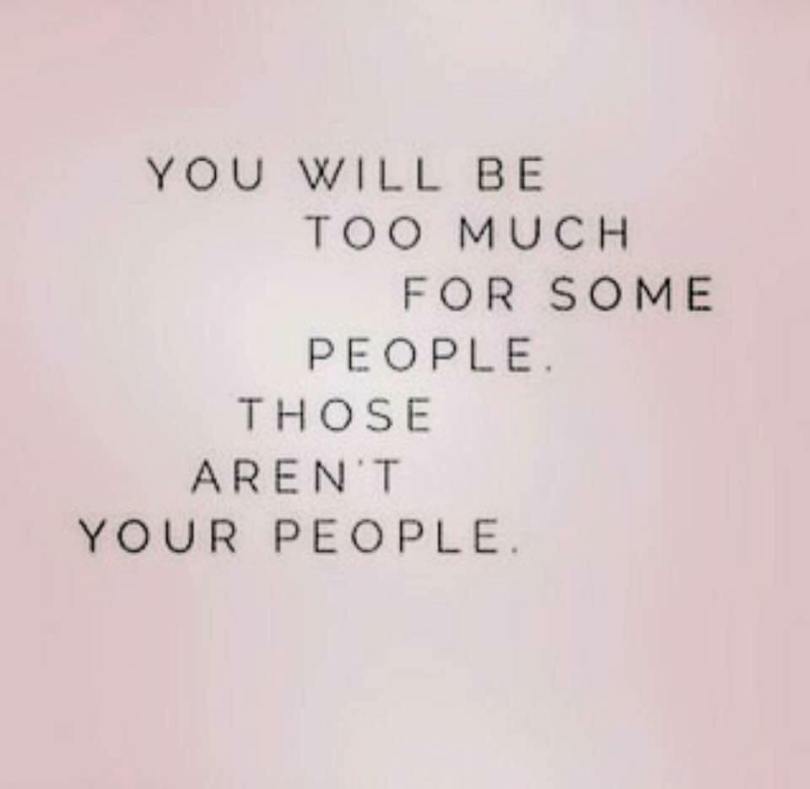
Find Your People

This is another thing that took me years to figure out. Years ago, I joined a moms’ meet up group. Even though I had little in common with the majority of the members (except for the fact that we were, of course, moms), I attended the events and tried to connect with everyone. Needless to say, disappointment ensued as I was excluded from meetups that were “not scheduled.” I remember seeing pictures on Facebook and thinking “how did I miss that meetup?” It turned out I hadn’t missed any meetup; they were all friends and just got together.

I will never forget the day when I was yet again in tears and my husband asked me, “when are you going to realize that they are not your friends?” I was furious at his reply at the time, but it hit me like a punch in the gut: he was right. They weren’t my friends. And what a blessing that turned out to be! They were NOT MY PEOPLE. Celebrate your uniqueness and know that in time you will find your people.